J'ai hâte d’expliquer mes expériences de mes vacances en Europe! J'espère que tu apprécies.
Nous avons pris un avion pour 8 heures pour commencer nos vacances aux Pays-Bas. Nous sommes restés avec ma tante qui était notre guide pour le voyage. Nous nous sommes réveillés à 7h30 tous les jours pour explorer la ville.Nous avons vu beaucoup de belles églises et nous avons mangé dans des cafés délicieux. Nous sommes allés à Amsterdam pour la journée et nous avons visité le Rijksmuseum. Nous avons vu de belles peintures. En Hollande, nous avons mangé beaucoup de fromage et vu beaucoup de moulins à vent. Ensuite, nous sommes allés en Belgique. Nous avons visité la ville, mangé beaucoup de chocolat et fait une excursion en bateau sur le canal. Nous sommes allés au champ de Flandre et nous avons visité le musée de la guerre. Bruges était magnifique!
Après la Belgique, nous sommes allés à Lille, en France. C'était l'une de mes parties préférées du voyage. Nous sommes allés à la crête de Vimy et nous avons vu le monument canadien. Nous avons pu visiter les tranchées et marcher sur les champs où les soldats ont combattu pendant la guerre.C'était vraiment un jour émotionnel. En France, j'ai utilisé ma connaissance du français pour parler en français avec les personnes.
Nous avons eu un voyage incroyable avec de la bonne nourriture, bonne compagnie et beaucoup de marche! J'ai hâte d'y retourner et de visiter l'Europe.
There is a new story emerging that is replacing the old story in education. The new story is urging us to learn new twenty-first century skills and how to implement technology, new pedagogy and teacher professionalism in education today. What is the old story and why is this new story so essential? Let us find out!
Old story
New story
·Factory model
·Teacher as expert
·Student is passive isolated learner
·One right answer
·Scientific method
·Knowledge can be quantified
·Knowledge is linear, sequential, rational, logical and objective
·Knowledge is uncertain, indeterminate, subjective, multiple realities
·Metacognition
·Intrinsic motivation
·Collaborative
(Drake, Kolohon, & Reid, 2014)
Retrieved from https://www.youtube.com/watch?v=f0RyaAsVNGU
According to Michael Fullan (2014), there are three interconnected Big Ideas in the new story: technology, the new pedagogy and the teacher as a change agent. Each of these three Big ideas plays a huge role in shaping our ever-changing educational system.
Technology
While some teachers are skeptical and cautious about the developing phenomena of technology, mostly because of the lack of knowledge on the topic compared to the students, technology is used to engage students and enhance learning (Drake, Kolohon, & Reid, 2014). Students are expected to bring their phones, laptops, tablets, I-pads and e-readers to class every day. Looking back at my schooling, if a student was caught with any form of technology listed above during school hours, it would be taken away and could potentially result in a detention. Now imagine being encouraged to bring these devices to class and not be punished for it? This still baffles my mind. There are thousands of educational apps that are offered online for students to learn. The internet makes learning accessible, fast, easy and adaptable to every student. Technology is also used for networking in the classroom. Students have the chance to collaborate with others around the world, editing their work, watching online lessons, problem-solving and interacting with virtual schools. (Drake, Kolohon, & Reid, 2014). Through this advancement in technology, teacher shifts their role from an expert to a facilitator and students take responsibility for their own learning. How have you seen technology shape our education system? Do you believe that it is beneficial?
New Pedagogy The new pedagogy is about deep thinking. Drivers of a new pedagogy suggest three major patterns of change in order to drive the new pedagogy (Fullan and Langworthy, 2014) .
1) Opening up learning, making it more accessible and flexible
2) Increased sharing of power between the professor and the learner
3) Increased use of technology
To learn more about this click HERE Teachers will need to integrate 21st-centruy skills such as communication, problem-solving, collaboration and creativity in order to activate this new pedagogy on deep thinking. Fullan and Langworthy (2014), believe that the new pedagogies require students to create new knowledge and connect it to the world by using the power of digital tools. Professional teaching capacity must be built for the new pedagogies to be effective (Fullan and Langworthy, 2014). As a prospective teacher, I have to ask myself, what can I do in order to be an effective teacher to require deep thinking from my students? This leads us into the last big idea; Teacher as a change agent.
Retrieved from:google images
Teacher Professionalism This last big idea describes the teacher as a person with agency that increases the learning of both students and him or herself (Drake, Kolohon, & Reid, 2014). Evaluation is the key component in agency. It is important for teachers to be able to assess their ability and impact on student learning. After they learn to assess, they can then come up with different strategies of teaching methods for their students.As a prospective teacher, it is my role to accommodate the diversity of the students in my classroom to the best of my ability. In order to do this, I need to remember to continue in being a life-long learner and continue to develop my communication skills, knowledge about student culture, delivery of student-centered lessons, and building positive relationships with the students. What does teacher professionalism look like for you?
Take care, EJD
References
Drake, S., Kolohon, W., & Reid, J. (2014) Interweaving curriculum and classroom assessment: Engaging the 21st Century Learner. Don Mills, ON: Oxford University Press.
Fortune, R. (2015). Educational Games for Kids. Retrieved November 2, 2015, from http://www.education.com/games/educational/
Fullan, M., & Lagworthy, M. (2014). A Rich Seam How New Pedagogies Find Deep Learning. (M. Fullan & M. Langworthy). Pearson.
Ontario, G. (2010). Towards a New Pedagogy of Engaged Learning. Retrieved from http://teachonline.ca/about-us
Towards a new Pedagogy of engaged learning. (2014). Retrieved 3 November 2015, from http://teachonline.ca/trends- directions/towards-new-pedagogy-engaged-learning
How many people can remember their favourite
teacher? Whether they did not give as much homework, never underestimated your
abilities, assigned fun projects etc., each person will remember all the
wonderful traits of this teacher. However, so often when we think back to our
schooling, the stories we all tell are the bad stories. The teachers that were
awful, the teachers that made us cry and left a bad impression on us, or the
teachers that were rude. It is those teachers who have shaped peoples
perspective on education. So, the question is, how do we engage students in
education to make them appreciate learning and gain an in-depth understanding of
the 21st century?
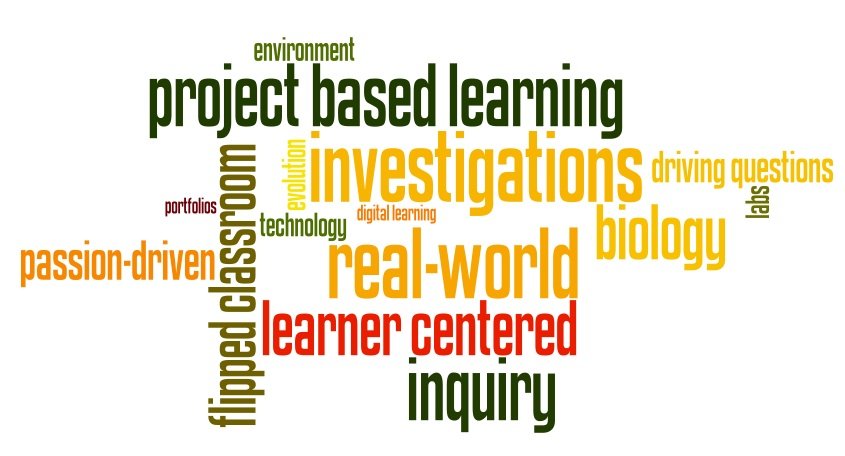
The answer lies in project-based learning. Project-based
learning is a more comprehensive approach that is grounded in constructivist
learning, content mastery, and critical thinking (Drake, Kolohon, & Reid, 2014). Students will gain the skills and knowledge for real world applications. PBL follows the guidelines of 21st century skills such as inquiry, research,critical thinking and problem
solving, organization, collaboration, and communication. How would our classrooms look if each one was centred around PBL? The teachers role shifts from from a director to a facilitator. In
doing so, students become critical thinkers, problem solvers and social,
physical and cognitive learners. This student-centered approach, which includes small group work,
student collaboration and teamwork, will ultimately present students with a more holistic and
educative experience. With this meaningful, purposeful and authentic learning
model, students will gain a more comprehensive experience in their education classes.
An article by the TEDx Youth Conference, offers a powerful way to make learning relevant to students’ lives. The teacher presents the students with a 13 week project. Each student will create a TED talk based on wellness, nutrition, physical education, and social-emotional learning, which shows the impact on an individuals overall social, emotional and physical well-being. Each student is presented with a driving question in which they research, explore and assess by gathering information about the topic and prepare for the final stage of presenting what they have learned. This method of teaching follows the exact guidelines of PBL. How many of you have experienced this in your schooling? This to me is what classifies a great teacher. Students will remember this teacher not because of the work he does, or the way he interacts with the students. but because he inspires. He will leave a lasting impression on each and every one of these students that will hopefully pass on a legacy. I can not even imagine what it would be like to direct my own learning. How many students would be more engaged in school if this was the case?
I would love to hear your thoughts about this 21st century way of teaching. Do you think we should be implementing this into all classrooms? Will it work for all students?
References
Drake, S., Kolohon, W., & Reid, J. (2014) Interweaving
curriculum and classroom assessment: Engaging the 21st Century
Learner. Don Mills, ON: Oxford University Press.
Jha, R. (n.d.). 23 Defining Traits Of Your Favorite Teacher.
Retrieved October 6, 2015
Parker, I. (n.d.). How a TEDx Mission Makes Learning Relevant To
Students' Lives. Retrieved October 6, 2015.
Why Project Based Learning (PBL)? (n.d.). Retrieved
October 6, 2015.

 Nous avons pris un avion pour 8 heures pour commencer nos vacances aux Pays-Bas. Nous sommes restés avec ma tante qui était notre guide pour le voyage. Nous nous sommes réveillés à 7h30 tous les jours pour explorer la ville. Nous avons vu beaucoup de belles églises et nous avons mangé dans des cafés délicieux.